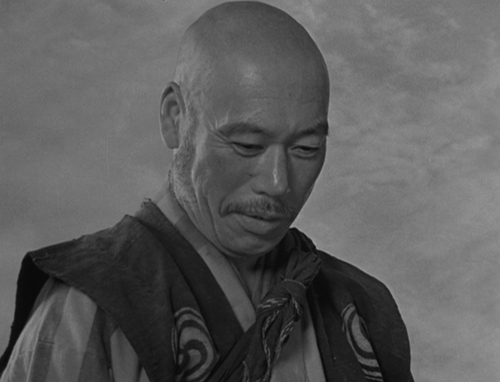
This must be Toesday
Recently a client of mine who once worked for a big firm told me an interesting story.
One morning, she was summoned to a large meeting. After everyone had gathered, the COO spoke in a reassuring way, indicating that yes business was down, but no downsizing was planned. My client wasn’t buying it.
After the meeting, my client asked to have a word with the COO in private. When they were alone, she got right to the point. “So Jim—how many of us are getting laid off?”
The COO gawped at her. “How did you know?”
“Every time you try to hide bad news,” my client replied, “you look down at your toes.”
Brain scientists and social anthropologists tell us that human beings are storytelling creatures. People are continuously transmitting stories—whether they know it or not. And the more aware leaders become of their hidden story giveaways, the more authentic, trustworthy, and credible they become.
Just imagine if Jim hadn’t looked down at his toes. Instead, he’d come forward and said, “As you know, the company is facing a downturn and, sadly, we will be letting people go. The leadership team has struggled with how best to tell you this. We felt that you deserve the most up-to-date, accurate information possible, which is why I’m giving it to you straight. We will be making every effort to help those who will be leaving the company.”
Even though this would be a difficult speech to give, it would preserve credibility for Jim and the company’s senior team. Credibility not only enhances a company’s ability to weather tough times, it gives all parties the maximum number of options. Who knows—perhaps in six months, the company will be able to re-hire some or all of the layoffs? Who would want to return to a company whose leaders deceived or patronized its workforce?
It’s precisely when tough messages must be conveyed that businesspeople must be most conscious of their storytelling. The right stories help leaders lead; and you can’t lead if you’re looking down at your toes!
Success Really Does Breed Success
In the mid-80s, a group of grad students at the University of Minnesota wanted to see if people would learn more quickly from success or failure. So they selected two bowling teams matched closely in experience, age, physical characteristic of bowlers, et cetera. One group was “Team A,” the other “Team B.” Then, the students videotaped a whole seasonʼs worth of tournaments.
From these recorded tournaments, the students created two edited video tapes. The first tape showed only the mistakes that “Team A” members made—holding oneʼs breath; releasing the ball incorrectly; or visibly losing focus after a disappointing game. The second video, however, showed “Team B” members doing things right.
After each video was shown to the relevant team, the team members were encouraged to talk among themselves about what they had learned, and what if anything they wanted to change. Almost immediately both teams began to tell each other stories. The big difference was that “Team A” produced a series of painful, negative stories while the positive tape produced a much more optimistic appraisal of success for “Team B.”
Both teams improved their game after seeing their video. However “Team B”—the ones who got the “success” mixtape—improved their score 38% faster than “Team A.”
Bowlers learn more quickly and effectively by focusing on their success rather than their failures.
This same experiment has now been replicated with other sports, with similar results. Great golfers find it far more effective to visualize a shot going straight down the middle toward the center of the green, than saying over and over, “What ever you do, donʼt hit it into the rough.”
These studies form the basis of a new field of organizational development: Appreciative Inquiry (http://bit.ly/qd3l1) Appreciative Inquiry, developed by David Cooperrider(http://bit.ly/qa29FI) and his associates, has found that people within organizations find it more productive to focus on what is working well—what is vital and successful within a business—rather than what is defective, deficient and destructive. In his work, participants are asked to tell stories of actual successful and vital events. What did those events actually look and feel like? The more specific the better.
AI says that what individuals and organizations focus on becomes reality; and the stories that are told within the organization reinforce that reality. The next time youʼre feeling stuck, visualize the outcome you want.
Say youʼre anxious to close a deal with a client. Hereʼs a few tips to move towards a positive mindset:
- Think like “Team B”: recall a time when you closed that deal—when you were feeling vital, happy and successful.
- In your mind, flesh out the details of that success. How were you feeling? What were you thinking? How were you behaving towards your client, and yourself?
- Visualize doing more of what made you successful.
- Now put that visualization into practice, and close this deal, too!
Bob is a certified executive coach. He helps managers and their teams become more successful by improving how they think and talk.
Contact Bob at: bob@first-voice.com
What Lady Macbeth Can Teach Doctors
Thereʼs a big problem in hospitals: patients are dying when they donʼt have to. According to Dr. Richard Pascale, Associate Fellow at Oxford University, “Twenty thousand Americans die every year because they are in a hospital and are exposed to a bacteria immune to antibiotics.” Thatʼs like a plane crash every week—and it doesnʼt have to happen.
The culprit is called MERA; itʼs a type of multi-resistant Staph which spreads when health care givers forget to wash their hands. Interestingly, men and women at the top of the medical hierarchy—doctors—forget more often than nurses, EMT or orderlies.
Many hospitals have tried posting stats in hallways; others actually levy fines. But neither approach has helped. (Whatʼs next? Maybe a picture of Lady Macbeth?)
Dr. Pascaleʼs approach was simple. First, he discovered a small VA hospital where there had been a 60% reduction in MERA. Then, he didnʼt talk to the administrators or doctors, but gathered stories from the people below—the orderlies, the patients. One patient said, “When I hears that squish sound”—someone using the disinfectant pump —“I sigh with relief.”
This and other stories led to two changes in hospital procedures. First, the hospital moved the dispensers from behind the bed to in front, so patients could see who was disinfecting before touching them. Next, administrators encouraged both patients and family members to speak up—a friendly, “Hey doc, please wash your hands.” This bottom-up approach has done wonders.
Who in your company has the least power? Perhaps itʼs your customers or assembly operators or your maintenance people. It might surprise and inspire you to spend some time asking them how they see the world and what steps can be taken to make your organization more vital and productive. The results might make you sigh with relief.
Come to Bob’s workshop and work on your empowering stories! More info here: Business Story Workshop.
There Will Be Stories
I was hired by the head of an oil company to help a particular refinery improve itʼs safety standards. Accidents had been occurring at an alarming rate over the last few years. This was well above the OSHA standards. The head of the refinery had tried to use financial rewards and punishments in a carrot and stick approach to improving safety. He monetarily rewarded the crews with the lowest accident rates while fining those who had more problems. He was confident that this would bring results. His motto was “Unleash capitalist principles to bring greater safety.”
It sounded great but after a year of using his program, the safety record was only marginally improved.
I suggested that I be allowed to interview the crews with the best safety record. I wanted to learn what they were doing right. What I discovered was that the stories of safe and effective procedures were being told to everyone on the team. For instance, a problem had arisen when crew members needed to select specific tools for a job. New crew members could get confused or feel rushed in selecting the correct wrench. They were reluctant to ask too many questions for fear of sounding “dumb” Consequently oil lines were improperly being shut down with the resulting unexpected pressures and potential fires.
One resourceful crew member painted the needed wrench bright blue. This visual cue made clear which wrench to select, even for neophytes. The crew chief made sure that this story was told to everyone, especially the newer crew members. The chief also urged his team to collect more safety stories and pass them on. Top management working with each platform chief adopted the policy of capturing and telling success and safety stories. The last time I checked, the refinery had a zero accident rate after 14 months of instigating this program.
It is human nature that everyone wants to feel safe. Financial incentives may not help or even get in the way. Instead, I suggest doing three things. First share stories of what is working well in your company. Second, make sure these stories are told again and again to all members of the team. Finally, let your team know that stories of success are welcome and appreciated.
Change is tough in any organization. Make sure that positive events in your culture are turned into stories about how problems get solved. Then encourage that these stories be told with passion and frequency.
Come to Bob’s workshop and learn to tell your stories of success! Sign up here: Business Story Workshop. Early-bird rates apply until 9/1/11!
The Tail that Launched a Thousand Ships
These are tough times and most of us are being pressured to do without or do with less.
So how is it possible that millions of people suddenly became concerned for the welfare of a single small brown and white terrier -so involved that the US Navy and Coast Guard were reluctantly pressured to send in ships and aircraft.
What force of nature could cause all this commotion? Why a story of course…
Bob has the ability to help you connect with your “Stories” – more importantly he helps explain in detail how to construct and tell the stories needed for all individuals and organizations. Prior to Bob’s workshop I was struggling with the transformational description of myself and newly formed business. Bob’s ability to “Listen” and connect me to my mind’s eye has allowed me to create a great and needed personal story. This newly formed story has the clarity and impact needed to help my clients and customers understand what our message is.
—Dr. Dale Deardorff Former Director of Strategic Thinking, Boeing
Join Bob in his Find Your Business Story Workshop on Sept. 22 and mobilize your forces: http://fybs-sept-22.eventbrite.com/
A Little More Gary Cooper, A Little Less Daffy Duck
My client Jim was in trouble because he couldnʼt get a job. Jim was a skillful consultant with a Ph.D. in psychology, and had been working in the financial world as a highly paid advisor to one specific firm for almost 10 years. This one client generated more than 90% of his income. He loved his job, and the firm rewarded his efforts with a steady
stream of work.
Until the board of directors replaced the firmʼs CEO. The new CEO wanted “a clean slate” — and Jim lost his job.
Jim began scrambling to find new consulting gigs. He was getting interviews but no callbacks, and no offers. He hired me to help him figure out what was going wrong.
When I conducted a mock interview, I noticed one damaging behavior: Jim could not stop talking. Even after something as simple and innocuous as “Why do you want this job?” or “Tell me about yourself,” the torrent began. Jimʼs speech was so rapid fire, itʼs amazing he was able to breathe!
Finally, I gently cut him off and asked if he remembered what my original question had been. He had no memory of why he was talking.
Jim is not alone in this behavior. Leaders are rewarded for taking charge and speaking up. This starts in school, which can seem like a game of “Jeopardy!”—the kid who hits the buzzer first, wins the prize. What child gets rewarded for thinking more slowly, deliberating or reflecting? And as we grow up, things only get more competitive. Add to this conditioning the additional stress of really wanting to impress the interviewer, and
itʼs easy to see why listening is a dying art.
I asked Jim to rent a few westerns made in the 40ʼs and 50ʼs. I suggested “High Noon” In this film Gary Cooper, the local sheriff is confronted with the knowledge that a gang of killers will be coming to his town in a few days. The train will arrive at noon. Cooper tries to recruit others in the town to help him stand up to the bad guys, but everyone turns him down, and he is forced to face the murderous gang alone. Cooperʼs dialogue is
sparse, direct and to the point. His ability to hold the silence makes him powerful. We know that the other characters are weak because they cannot look him in the eye or stop stammering excuses. There is no question he is the hero and the power of his silence proves it.
Lessons to practice when meeting new people, especially in high-stakes situations:
• Become aware of any stress, anxiety, or pressure to impress well before the meeting takes place.
• At the meeting, really listen to the questions being asked. Hold them in your mind for a few seconds before responding.
• If you arenʼt clear on a question, ask for clarification before you answer.
• If you find yourself talking a lot, ask yourself “Why am I talking?”
[These tips should help you avoid this common communication error, and really connect. The next interview Jim had, he talked less, said more—and got the job!]
Or something like this.
Bob has scheduled his next workshop for September 22. Sign up now and take advantage of the early bird discount. And don’t miss out, we had to turn people away from the last workshop! Get all the info here: Finding Your Business Story
You probably will never see this….
I see it everywhere—in clients, friends, even myself: a feeling of being overwhelmed by information. Email, social media, phone calls, coming at them 24 hours a day, every day.
“Did you get my email?”
“Who knows? I get 300 of them a day.”
One client sums it up like this: “I’m being crushed by all this information. It’s gotten so bad that in the morning I dread turning on my computer and seeing how many new messages I’ve gotten. I don’t need any more information. What I need is meaning, context—something that helps me make sense of my world.”
What helps create more meaning? A well-crafted story, grounded in experience. Remember that stories don’t have to be long. Stories can do more than entertain; they inform, educate and inspire. The right story at the right time can change your world for the better. They can help you stand out in our era of too much information.
Come and practice telling your business story at my next workshop on June 30th. Only 2 slots left before the workshop is filled. Grab them here. (http://june-find-your-story.eventbrite.com)
Have you checked the pulse of your story?
More than 60% of the companies originally listed on the Fortune 500 have vanished. All these casualties of capitalism have one thing in common: they lost their story, then they lost market share.
Just a few years ago Ford was in a pickle.
Ford has been one of the most successful, iconic businesses in the United States. It’s been building automobiles for almost 100 years and its brand is recognized around the world. Yet in 2003 and ‘04 pundits were talking about the real possibility that Ford could go out of business. Ford’s old story of building tough trucks and SUV’s at the exclusion of smaller, more fuel efficient cars was not working. The company had alienated many younger customers, especially women. People were turning to other carmakers like Toyota and Honda. These companies were telling stories that appealed to a younger, more diverse base.
So Ford did something courageous it hired a new CEO by the name of Alan Mulally.
Alan was not an auto industry insider. He came from aerospace — with a fresh new story. His story was simple: “We are going to build highly efficient, high quality cars and trucks. They will be safe, innovative, fun to drive.” He also borrowed several billion dollars from private sources before the financial collapse of 2008/09. This put Ford ahead of its US competition and the company followed through with new products that resonated with Mulally’s new story. After years of losing market share, Ford became profitable again in late 2009.
Companies that have survived and thrived have powerful, vibrant narratives that give them a strong sense of community and identity. These stories make people care and understand what these companies really stand for. If you want a business that will last, start with a great story. If you want to make sure your current venture survives, fix the story first.
What’s your business story? Are you making people care? Are you creating community? Do people know what your company stands for?
Join our community of storytellers on June 30th to breathe more life into your business! Sign up by June 15th (just 3 days left!!) and get the early bird discount.
Find Your Story – Early Bird Tickets
There are only two weeks left to get your early bird discount. Sign up now!
Recently Lynda Resnick, the CEO of a two billion dollar conglomerate whose brands include Fiji Water, Teleflora, and POM Wonderful, stated the principle behind her success. “I donʼt do companies that donʼt have a story. If they donʼt have a story, they donʼt have a business.”
Sign up here: http://june-find-your-story.eventbrite.com/
In this four hour, interactive workshop you will learn to tell a story which…
- …makes others care about whatʼs important to you;
- …differentiates yourself from your competition;
- …speaks to the challenges that face your clients, manager or direct reports;
- …transforms trying to convince people into having them see new possibilities;
- …enrolls new clients and co-workers.
Past participants in this workshop have included attorneys, accountants, coaches, managers, engineers, entertainment executives, officers of non-profits, entrepreneurs, and even actual rocket scientists. It can help you, too!
Finding hidden treasure
The people we work with every day are often the ones we know the least about – usually they have hidden talents & skills that would enrich our business and personal lives. Here’s an example of that:
Jim was a CEO of a manufacturing company based in Chicago. One day, one of his employees, a janitor named Helen, suddenly died. That made Jim sad—then he was amazed to read that over 5000 people went to the womanʼs funeral, including a reporter from The Chicago Tribune. To Jim, Helen was just a janitor—but her full story was much, much more.
For twenty years, after the workday was over, Helen had been a choir director. She had organized and trained ten choirs at ten different churches. It was this life outside of work —a life her bosses knew nothing about—that made Helenʼs entire community turn out to pay its respects.
Jim contacted Helenʼs husband, to give his condolences. “Your wife was remarkable,” Jim said. “She mustʼve really been inspiring to people.” “Yes. And she had great organizational skills,” Helenʼs husband said. “Our company needs people like that. I wish Iʼd known!” From now on, Jim thought to himself, Iʼm going to know the total employee, not just what they do from nine-to-five. My company will discover and encourage gifted people who will share their stories and, whenever possible, support the entire person.
As a leader, do you know what your employees care about away from the office? Do you understand what inspires them or keeps them up late at night? How do you encourage your employees to break down “silos” and share their stories? How do you motivate your people to enrich and vitalize the work culture?
One program Jim started was a bi-monthly lunch where employees were encouraged to share who they were and what they did. People became interested in each otherʼs activities and projects. The most worthy projects were awarded grants from the organization and drew volunteers from all levels of the company. Jim has noticed an improved morale with more loyal employees, who stay with the company longer.
Join me at my Finding Your Story Workshop and release your hidden treasure!
(P.S. if that link doesn’t work, copy and paste this one: http://www.eventbrite.com/event/1742974283)